Drone-defense assessment, consulting and netting

Your perimeter was built for the ground.

Plan for the aerial approach.

Veil Systems consults, assesses sites, designs, procures, installs, and services drone-defense systems. We integrate equipment around your site and the authorities that apply. We also supply and install passive drone netting. Our vehicle protective cage prototype is in testing; no validated performance is claimed.

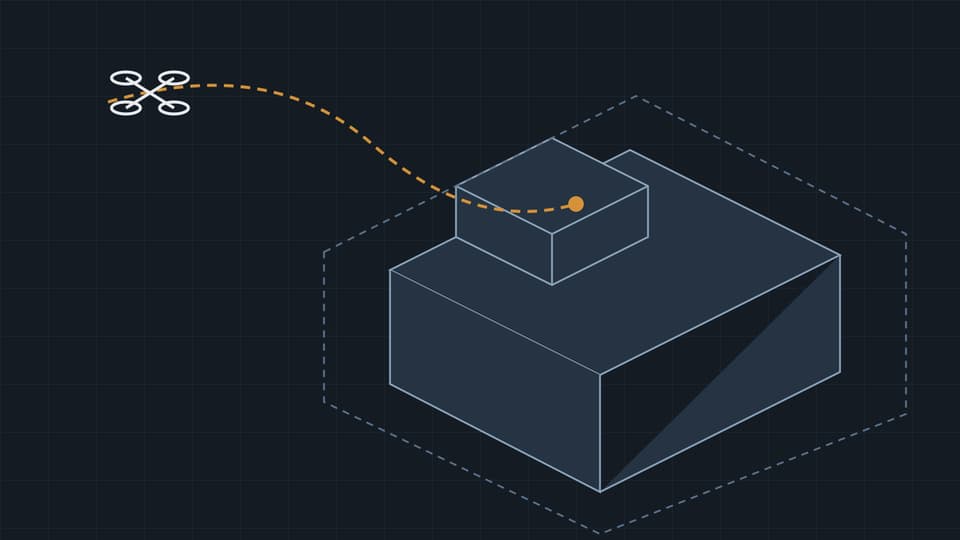
Hero visual: illustrative scenario — not a Veil installation or a real incident. Concept schematic.

What has not happened here yet

A cheap aircraft. An exposed node. Outsized damage.

Aerial approaches need their own assessment. CISA explains that drones can bypass ground perimeter controls and disrupt critical operations. The scenarios below illustrate planning questions, not predictions or reports of attacks. CISA guidance.

Illustrative scenario

Scenario — Nuclear power plant support

An FPV targets switchyard equipment, cooling support, or other non-containment assets. For nuclear power plants, the NRC states plant security forces do not have authority to interdict or shoot down aircraft, including drones, flying over their facilities.

Illustrative scenario

Scenario — Refinery or oil depot

An FPV strikes a vulnerable above-ground node—piping, a pump, a tank-farm edge—producing fire, forced shutdown, and supply consequences disproportionate to the cost of the aircraft. History abroad shows how aerial hits on processing capacity move markets.

Illustrative scenario

Scenario — Data center

An FPV disables outdoor generators, fuel systems, or cooling plant. IT loads drop. The Uptime Institute’s 2025 survey reported that 54% of respondents’ most recent significant, serious, or severe outages cost over $100,000, and one in five exceeded $1 million. These are general outage costs, not drone-loss estimates.

Illustrative scenario

Scenario — Hospital generator

An FPV disables the outdoor emergency generator or its fuel supply. Lighting, records, and electricity-dependent medical equipment ride on that last line. Hospitals cannot suspend operations when power fails.

Illustrative — ground perimeter vs. aerial approach. Concept schematic. Not a Veil installation.

The central gap

The fence was never the answer to this.

Most critical sites already invest seriously in perimeter security. Fences. Gates. Cameras. Access control. Armed guards. Those layers are real, and they matter—for the threats they were designed to stop.

They were designed for people and vehicles that arrive on the ground.

  • Fence & razor wireStops climbers and vehicles. Does not stop altitude.
  • Gate & badge controlAn FPV does not badge in at the gate.
  • Armed guard / towerGround security was not budgeted as the primary answer to a low, fast aircraft.

That gap—between a perimeter built for the ground and a threat that uses the air—is the problem Veil exists to help close.

Supporting proof

This is not theoretical. It is already happening—elsewhere.

Overseas campaigns show what the aerial approach looks like when it is exploited. Homeland incidents and federal guidance show the same approach geometry exists here. Brief, sourced history—not the lead of this page.

2019

Abqaiq / Khurais, Saudi Arabia. Aerial attack on energy processing. EIA: Abqaiq alone ~7 million b/d (~7% of global crude oil production capacity); largest single-day Brent/WTI jump in a decade.

2020

Pennsylvania substation drone. Modified commercial UAS recovered near an electric substation. Joint intelligence bulletin (reported publicly) assessed it as the first known U.S. instance of a modified UAS likely intended to target energy infrastructure. No outage; operator not identified.

2022

Moore County, N.C. (fragility proof). Substation shootings—not a drone attack—left tens of thousands without power. Reminder of how fragile a few physical nodes can be.

2023–24

Langley-Eustis UAS flights; Tower 22. CBS News reported unauthorized UAS over Joint Base Langley-Eustis for more than two weeks (Dec 2023). Langley-Eustis incident reporting. Jan 2024: one-way attack drone struck Tower 22 in Jordan; DoD confirmed three U.S. service members killed.

2025

Spider’s Web; LatAm escalation. Ukraine’s June 2025 FPV operation against Russian strategic aircraft on the ground. CSIS documents sharp rises in explosive drone attacks by criminal and guerrilla groups in Mexico and Colombia. ACLED ranks Myanmar among the world’s most active conflicts for recorded drone events.

Scale of consequence

The aircraft is cheap. The node is not.

Sourced numbers that frame asymmetry. No invented damage totals for hypothetical U.S. FPV attacks.

Large power transformer lead time

DOE Large Power Transformer Resilience Report, July 2024

Common quote~36 months
Maximum reportedup to ~60 months

LPTs typically weigh 150–400 tons. Custom machines. Hard to spare. DOE reports that ~90% of U.S. electricity passes through an LPT at some point.

Cost asymmetry

CSIS (FPV, May 2025); GAO-23-106180 (LPT, Aug 2023)

~$200–$1,000

Average FPV attack-drone cost class cited for the Ukraine conflict, with ~5–15 km typical range.


up to ~$10M

LPT purchase cost reported by utilities to GAO, plus hundreds of thousands to transport—before counting outage impact.

Data-center outage cost

Uptime Institute Annual Outage Analysis 2025

Most recent significant+ outage > $100k54%
Cost more than $1 million20%

Power issues remain a leading cause of serious and severe data-center outages. These survey results are not estimates of drone-related losses.

Where Veil comes in

Not a new radar. A plan shaped to your site.

We begin with the facility, its operating constraints, and the people responsible for response. Our proposed scope connects site assessment, equipment selection, integration, and service. Deliverables and acceptance criteria are agreed for each engagement.

01 — Consult

Consult

Work with security, operations, and counsel on the site, the assets that matter, the aerial approaches the fence does not cover, and who is authorized to do what.

02 — Design

Design

Layer sensing (RF, radar, EO/IR, and others as appropriate) with procedures and a response plan matched to your authorities—not a catalog page.

03 — Procure

Procure

Source and procure the systems that fit the design. Combine the equipment selected for the requirement rather than forcing a single manufacturer’s stack when the site needs something else.

04 — Install

Install

Siting, integration with existing security operations, commissioning, and documentation—so it works in the real geometry of the facility.

05 — Service

Service

Maintenance, updates, training support, and lifecycle care so the capability does not quietly degrade.

Authority defines the scope. Veil provides integration and support. Mitigation actions remain with agencies and personnel holding the required authority; contractors do not inherit it. Read the authority boundaries.

Illustrative process — not a depiction of a specific Veil deployment.

Who this is for

Explore all industries →

Built for sites that cannot afford to learn this the hard way.

If your perimeter assumes threats arrive on the ground, the aerial approach is still an open question. We help close it—within the law.

Military & defense

Installations and defense facilities

Nuclear & research

Generation, labs, and related campuses

Electric grid

Utilities, transmission, substations

Energy midstream

Refineries, fuel depots, midstream

Data centers

Digital infrastructure and campuses

Healthcare

Hospitals where backup power matters

Government

Embassies, diplomatic, government sites

Critical industry

Sites whose interruption cascades

How authority works

Detection, mitigation, and who may act.

System functionality, spectrum, privacy, location, and operator authority determine the legal requirements. Counsel review is pending.

Veil designs and offers integration and support within the applicable authority; mitigation actions are performed only by personnel and agencies that hold the required authority. See Sources for eCFR, Federal Register (July 2026), and the interagency legal advisory.

Next step

Discuss your site.

Every site is different. The threat picture, the airspace, the assets, and the authorities are different. The useful next step is a conversation—not a product brochure.

Book a call

Talk through your facility type, current security posture, and whether a formal assessment makes sense.

Request a site assessment

A structured review of aerial approaches, detection options, integration with existing operations, and the legal boundary between detection and mitigation for your organization.

Start a site assessment inquiry

Brief answers

Common questions

Does Veil manufacture drones or counter-drone weapons?

No. We design, procure, install, and service integrated solutions built from existing technologies.

Can Veil “take down” a drone at my private facility?

Mitigation authority is limited by federal law. We help you understand what is lawful for your organization and design systems accordingly. Mitigation actions are executed only by authorized operators.

Do you only sell one vendor’s stack?

We design to the site. Procurement follows the design. We combine the equipment selected for the requirement.

Is detection always legal?

No. Legality depends on the system’s functions and how it is used—not on marketing labels like “passive” or “active.” Engage counsel; we plan with that reality in mind.

Do you publish customer lists or past installations?

No customers, contracts, or completed deployments are claimed. Ask us directly about current capacity and engagement model.

Citations

Sources

Primary and reputable sources for claims on this page. Review dates align with the November 2026 narrative draft.

  1. CBS News — Langley-Eustis drone incidents (Dec 2023): cbsnews.com
  2. CSIS — “The Russia-Ukraine Drone War,” May 28, 2025: csis.org
  3. Kyiv Post — combat FPV speeds, Sept. 16, 2024: kyivpost.com
  4. DOE — Large Power Transformer Resilience, July 2024: energy.gov PDF
  5. GAO-23-106180 — Electricity Grid / transformer reserves, Aug. 2023: gao.gov
  6. NERC CIP-014-3 — Physical Security Reliability Standard: nerc.com PDF
  7. NRC — Drones and Nuclear Power Plant Security, Jan. 2025: nrc.gov
  8. EIA — Abqaiq/Khurais outage, Sept. 23, 2019: eia.gov
  9. Uptime Institute — Annual outage analysis 2025: uptimeinstitute.com PDF
  10. FEMA — Healthcare Facilities and Power Outages: fema.gov PDF
  11. CISA — Be Air Aware / protect critical infrastructure: cisa.gov
  12. CISA — UAS Detection Technology Guidance, Aug. 2025: cisa.gov PDF
  13. Reuters — Spider’s Web, June 1, 2025: reuters.com
  14. DoD — Tower 22 release: defense.gov
  15. ACLED — Myanmar drone warfare: acleddata.com
  16. CSIS — Latin America criminal drones: csis.org
  17. CNN — Pennsylvania substation drone / JIB: cnn.com
  18. FBI — Moore County seeking information: fbi.gov
  19. 28 CFR 124.4: ecfr.gov
  20. Federal Register — Counter-UAS authority for SLTT, July 6, 2026: federalregister.gov
  21. Interagency Legal Advisory (FAA host): faa.gov PDF

Passive netting and vehicle protection

Alongside consulting and integration, Veil supplies and installs drone netting for facilities, equipment, and routes. The vehicle protective cage prototype is in testing, with no validated performance claimed.

Explore netting configurations · Vehicle cage development

Discuss your requirements

Share a general business summary. Please leave out sensitive site details.